
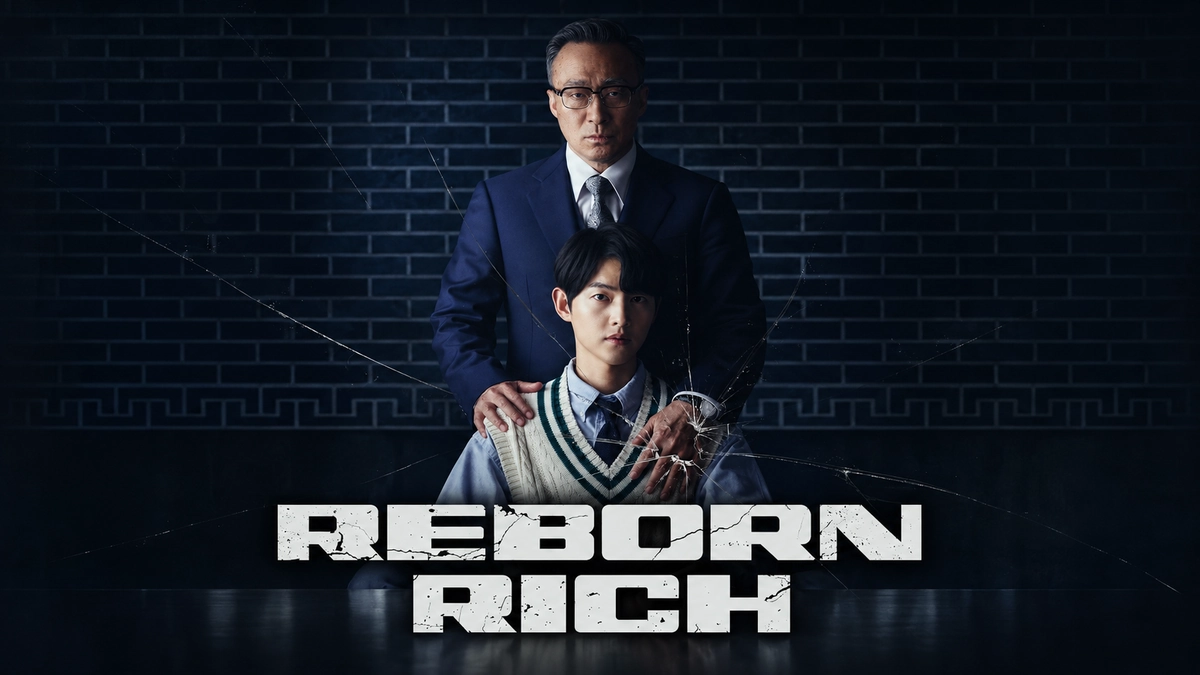
What would we do if we could turn back time? We might avoid mistakes by using what we already know about the future or take advantage of opportunities we once missed.
It’s an idea most of us have imagined at least once. That’s why the premise of someone returning to the past and becoming part of a powerful conglomerate family immediately caught my attention.
Reborn Rich takes this familiar fantasy and turns it into something much more than a simple success story. It brings together major events from modern Korean history, intense corporate competition, and the hidden ambitions of a wealthy family.
At first, the biggest question is what the protagonist will do with his second chance. But as the story progresses, the people within the Soonyang Group and their complicated relationships become just as fascinating.
The series aired on JTBC in 2022 and consists of 16 episodes across one season. Based on a Korean web novel of the same name, it combines several genres into one compelling story.
Rather than discussing the ending or its major revelations, this review focuses on what makes the experience of watching the drama so entertaining.
A Second Life That Grabs Your Attention From the Beginning
Yoon Hyun-woo works for the Soonyang Group, handling sensitive and often unpleasant matters for the company’s powerful founding family.
He rarely refuses a task, no matter how difficult or demanding it might be. Yet the treatment he receives hardly reflects his dedication.
The opening episodes make something very clear: even within a prestigious corporation, a person’s position often depends on whose side they are on.
Then Hyun-woo experiences an extraordinary turn of events and finds himself living as Jin Do-jun, the youngest grandson of the Soonyang family, in 1987.
Even if you already know the basic premise, the transformation feels surprisingly powerful.
A man who previously had to follow other people’s orders suddenly gains the opportunity to make his own decisions as a member of the very family he once served.
His circumstances have completely changed, but he still possesses the knowledge and experience of his previous life.
That contrast creates much of the drama’s early appeal.
Do-jun doesn’t suddenly become an invincible character who can accomplish anything without difficulty.
He must understand the family’s rules, establish his position, and prove his abilities to people who underestimate him.
As a result, even his smallest decisions become interesting. Every conversation and calculated move leaves you wondering what he will do next.
The Satisfaction of Knowing What the Future Holds
One of the most immediately enjoyable aspects of the series is watching Do-jun transform knowledge of the future into an advantage in the present.
Land that has yet to be developed, businesses that will eventually transform society, and approaching economic crises all appear completely different from his perspective.
The storyline involving Bundang’s development and the investment opportunities surrounding it is particularly satisfying.
Knowing what will happen might make an investment seem easy. But convincing people to act on that knowledge and actually moving money and power are entirely different challenges.
Do-jun must decide not only what information to use, but also when and how to reveal it.
This is why the excitement goes beyond simply watching someone who already knows the correct answers.
When should he speak to make people believe him? Who should he work with? And how long should he wait before making his next move?
Watching these calculations unfold feels almost like observing an elaborate strategy game.
In many dramas about wealthy families, money is presented as an established source of power.
Here, the process of creating, investing, and transferring that wealth becomes an important part of the story.
Even when enormous investments or corporate acquisitions are discussed, the drama rarely feels like a collection of financial figures.
Instead, we see how those decisions change people’s expressions, attitudes, and relationships.
That human element makes the financial conflicts surprisingly engaging.
Lee Sung-min’s Remarkable Performance as Jin Yang-cheol
If I had to choose one character who leaves the strongest impression, it would be Chairman Jin Yang-cheol.
Lee Sung-min has an extraordinary ability to change the atmosphere of a scene through subtle expressions, carefully controlled speech, and moments of silence.
Sometimes, a single look communicates more than several lines of dialogue.
Jin Yang-cheol is much more than a stereotypical wealthy old man.
He takes enormous pride in having built his company, possesses sharp business instincts, and applies demanding standards even to his own family.
You don’t have to agree with his methods to understand why people respect and fear him.
One particularly memorable scene involves his question about the number of grains of rice in a piece of sushi.
It may seem like a trivial detail, but it reveals something important about his personality.
He is a man who refuses to overlook small details, even while managing an enormous business empire.
The scene communicates his entire approach to life in a surprisingly simple way.
His distinctive dialect and manner of speaking also make the character unforgettable.
In another actor’s hands, the role might have become an exaggerated portrayal of a powerful chairman.
Lee Sung-min instead gives him a convincing sense of history, authority, and humanity.
Listening to him speak sometimes feels like hearing the voice of an entire generation of Korean business leaders.
A Grandfather and Grandson Bound by Cooperation and Competition
Whenever Song Joong-ki’s Jin Do-jun and Lee Sung-min’s Jin Yang-cheol share the screen, the tension immediately increases.
One knows how the future will unfold. The other has spent decades building and controlling the business world of the present.
Each possesses something the other lacks, which makes their relationship fascinating from the beginning.
Yang-cheol doesn’t simply accept everything Do-jun says.
Likewise, Do-jun cannot openly reveal all his thoughts and intentions to his grandfather.
Yet through their conversations about business, they begin to recognize each other’s abilities.
Family affection and fierce business competition exist within the same relationship.
That combination is one of the drama’s greatest strengths.
Even scenes in which the two characters simply sit across from each other and talk can be remarkably entertaining.
You begin watching for the smallest details.
Who understands the other’s intentions first? Which question is a test? Which expression signals approval?
Even the silence after a conversation can feel like part of a carefully calculated battle.
Song Joong-ki doesn’t exaggerate the differences between Yoon Hyun-woo and Jin Do-jun.
Instead, he communicates the transformation through changes in confidence, body language, and the way his character responds to others.
His performance becomes particularly compelling when Do-jun quietly observes a situation before expressing his intentions at exactly the right moment.
Those scenes make the character’s development feel convincing.
The Appeal of Korea’s Changing Economy in the 1980s and 1990s
One reason Reborn Rich stands apart from many other time-travel dramas is the specificity of its historical setting.
Beginning in 1987, the story follows major changes in Korean politics, economics, and popular culture.
These events are not merely background decorations. They directly influence the characters’ decisions and the opportunities available to them.
The 1997 Asian financial crisis, for example, becomes much more than a historical event mentioned in a textbook.
It is portrayed through struggling businesses, uncertain livelihoods, and the difficult choices made by people facing economic instability.
What makes these situations especially interesting is how differently people experience the same event.
For some, a crisis threatens everything they have built.
For others, it creates an opportunity to make a new investment or acquire a business.
Watching these contrasting perspectives can be both fascinating and thought-provoking.
Viewers who remember the period may recognize details from the news, streets, and atmosphere of the time.
For younger audiences, the drama provides enough context to follow these historical developments without requiring extensive knowledge of Korean economic history.
This gives the series the appeal of both a historical drama and a corporate thriller.
Industries such as semiconductors and automobiles, which played major roles in South Korea’s economic development, also feature prominently.
The conflict between people who recognize the future potential of technology and those focused on immediate financial results gives the story a sense of scale beyond an ordinary family dispute.
Of course, Soonyang is a fictional corporation, and its characters are not direct representations of real business figures.
However, the drama draws inspiration from recognizable historical events and corporate developments.
That connection encourages viewers to think about the relationship between fiction and the real history of South Korea’s economic transformation.
A Story About Money That Becomes Even More Interesting Through People
At first, it’s easy to become absorbed in questions about which investment will succeed or which business strategy will prove correct.
But after several episodes, I found myself paying even closer attention to how the characters reacted to those decisions.
The reason is simple: people want different things, even when they are competing for the same wealth.
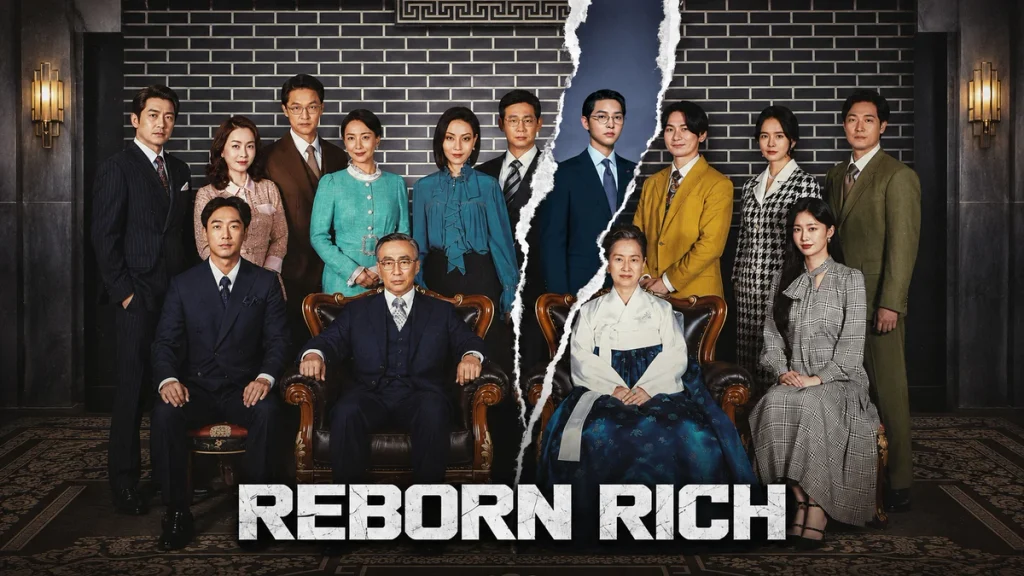
Members of the Soonyang family, including Jin Young-ki, Jin Dong-ki, and Jin Hwa-young, all have their own ambitions and insecurities.
Although they belong to the same family, major corporate decisions often turn them into rivals.
Sometimes, one character’s smile is enough to make another person’s expression suddenly change.
Those little moments communicate the family’s complicated atmosphere more effectively than lengthy explanations.
What I found especially interesting was how even extremely powerful people still desperately seek recognition from others.
From the outside, they seem to possess everything anyone could want.
Inside the family, however, they remain trapped in a hierarchy filled with competition and insecurity.
Having enormous wealth doesn’t necessarily mean having peace of mind.
This simple idea makes the characters feel surprisingly human.
Inheritance and corporate succession are presented as more than questions of dividing assets.
They become struggles involving pride, identity, and the desire to be acknowledged.
The important question isn’t always who will receive the greatest share.
It’s why each person believes they deserve it.
Supporting Characters Who Keep the Tension Alive
If the entire series depended only on its two central characters, the 16-episode story might have become repetitive.
Fortunately, the supporting cast adds considerable variety and energy.
Kim Shin-rok brings a lively intensity to her portrayal of Jin Hwa-young.
Her character’s willingness to express her emotions openly creates a refreshing contrast with the more calculating members of the family.
Jo Han-chul’s Jin Dong-ki is equally entertaining.
He is strategic and ambitious, but his impatience frequently shows through.
Whenever he appears, it’s difficult not to wonder what decision he will make next.
Jin Seong-jun, played by Kim Nam-hee, and Mo Hyun-min, portrayed by Park Ji-hyun, also form an intriguing combination.
Their conversations are often outwardly calm, but there is considerable tension beneath the surface.
The subtle ways they observe and evaluate each other reveal another dimension of how power operates within the family.
These supporting characters give the story a much broader perspective.
The narrative doesn’t remain focused exclusively on Do-jun.
Even when the attention shifts to other family members, the tension continues because their decisions can influence the entire balance of power.
Seo Min-young Offers a Different Perspective
Shin Hyun-been’s Seo Min-young provides a perspective that differs significantly from the world of the Soonyang family.
While many characters measure success through financial influence and corporate control, she approaches situations through principles of law and justice.
Her relationship with Do-jun introduces a different emotional rhythm into the story.
Their interactions provide quieter moments between the intense business negotiations and family conflicts.
Rather than relying heavily on dramatic romantic declarations, their relationship often develops through subtle changes in attitude and differences in personal values.
What makes Min-young particularly meaningful is the way she reminds viewers that money and power may not provide answers to every problem.
When she and Do-jun share a scene, the contrast between their perspectives becomes clear.
Their interactions naturally raise questions about what matters beyond success and ambition.
Fast-Paced Storytelling and Carefully Controlled Tension
The drama handles its complicated information effectively by revealing details at moments when they matter most.
A business proposal may be followed by a family confrontation.
One major decision often creates the conditions for another conflict.
This structure helps maintain momentum throughout the series.
Even viewers unfamiliar with corporate finance can generally follow the important developments.
After all, the central question behind many complicated transactions is relatively straightforward: Who gains power from this decision?
By connecting business strategies to recognizable human motivations, the series makes potentially difficult material accessible.
The visual presentation also contributes greatly to the experience.
Quiet conference rooms, imposing corporate offices, period-appropriate clothing, and carefully designed interiors all reinforce the atmosphere.
The drama demonstrates that a scene doesn’t need elaborate action sequences to feel intense.
Sometimes, a quiet conversation becomes just as exciting as an unexpected plot twist.
A particularly effective example is the way characters react after Jin Yang-cheol delivers a short but commanding statement.
Everyone seems to study his expression before deciding what to say next.
Similarly, Do-jun’s habit of quietly observing situations before revealing his plans creates a sense of anticipation.
The camera often focuses on faces and exchanged glances.
The longer those moments continue, the more clearly the invisible struggle for power becomes apparent.
More Than the Fantasy of Becoming Wealthy
The satisfaction of watching Reborn Rich doesn’t come solely from seeing its protagonist accumulate wealth.
A greater part of its appeal lies in watching someone who once had little control over his life finally gain the power to make meaningful decisions.
In reality, hard work alone doesn’t always overcome the disadvantages of an unequal starting point.
That’s why the idea of beginning again with knowledge of the future feels so appealing.
It represents a chance to correct past mistakes, reclaim missed opportunities, and finally stand confidently before people who once looked down on you.
However, as Do-jun’s journey develops, the story also suggests that possessing information isn’t the same as knowing how to succeed.
He needs to understand what motivates people, recognize when to accept risks, and know when patience is more valuable than immediate action.
The most interesting question isn’t simply what someone would buy if they knew the future. It’s how they would use that knowledge.
That distinction gives the series a deeper appeal than a straightforward fantasy about becoming rich.
Despite its luxurious corporate setting, the drama occasionally encourages viewers to reflect on their own decisions.
Are we paying enough attention to the circumstances around us?
Even when we believe we’re right, are we prepared to convince other people?
These questions give the story a relevance that extends beyond its extraordinary premise.
Why This Drama Is Worth Watching Again
Some of the most memorable moments aren’t necessarily the biggest events.
A slight change in the chairman’s expression, a character suddenly becoming speechless after an unexpected proposal, or two people silently realizing that they understand each other’s intentions can leave a stronger impression.
If I watched the series again, I would probably pay less attention to the outcomes of investments and more attention to the conversations that preceded them.
Knowing what happens doesn’t eliminate the pleasure of discovering why someone makes a particular choice.
In fact, it can make those decisions even more interesting.
Reborn Rich is at its strongest when it explores conflicting ambitions rather than simply dividing its characters into good and evil.
Different viewers may sympathize with different characters, even while watching exactly the same scene.
That makes it the kind of drama that encourages conversations long after an episode ends.
People interested in economics can enjoy the historical developments and investment strategies.
Fans of family dramas can become absorbed in the changing relationships and emotional conflicts.
And viewers who enjoy psychological battles between strong personalities will find plenty to appreciate in the performances and dialogue.
What makes Reborn Rich especially memorable is how naturally its different genres work together.
Knowledge of the future influences investments.
Those investments reshape the family’s internal hierarchy.
The resulting changes affect relationships, ambitions, and personal emotions.
Rather than existing as separate elements, the fantasy, corporate drama, and family conflicts continuously strengthen one another.
Across its 16 episodes, what keeps the story engaging is the anticipation of the next important decision.
The question gradually becomes less about who will reach the highest position and more about what choices the characters will make along the way.
Although the story unfolds within an extraordinarily wealthy family, many of its emotions are surprisingly familiar.
The desire to seize opportunities, earn recognition, and build a better life is something viewers can understand regardless of their circumstances.
That’s why the smallest expressions can feel just as significant as the movement of enormous amounts of money.
For anyone who enjoys the excitement of time-travel fantasy, the strategic complexity of corporate dramas, and powerful character-driven performances, this series is an excellent choice.
What begins as an imaginative story about turning back time gradually becomes an engaging exploration of ambition, relationships, and the meaning of power.
And that combination is what makes the experience stay with you long after watching.