
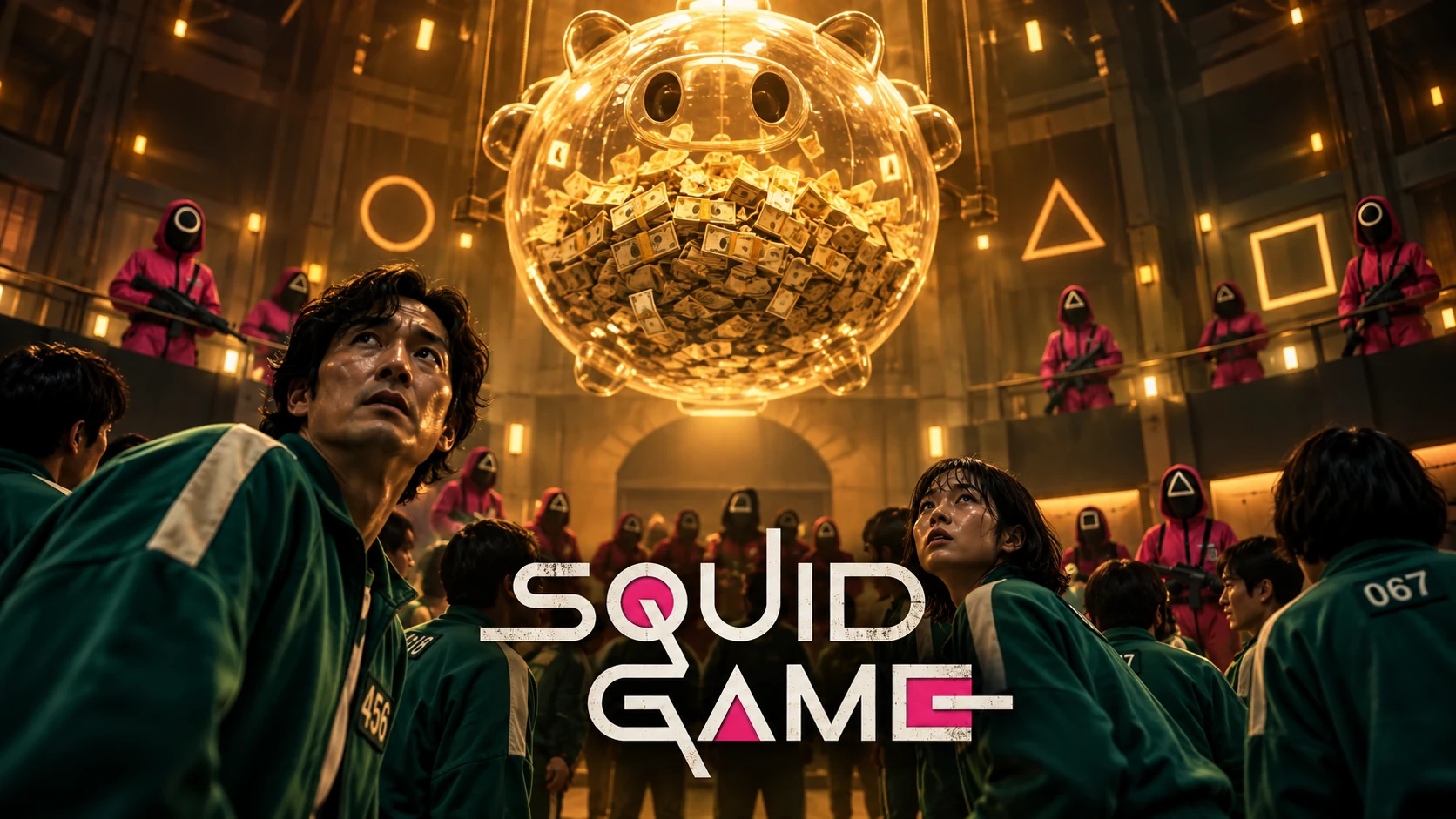
Spoiler Warning: This article contains major spoilers for Squid Game, including Season 3’s final episode, major character deaths, and the ending of the entire series.
Squid Game ends with a devastating choice that changes the meaning of its deadly competition. After three seasons of violence, betrayal, and desperate attempts to survive, the final winner is not the person viewers might expect.
This Squid Game ending explained guide breaks down why Gi-hun sacrifices himself, how a newborn baby wins the competition, what happens to the Front Man, and why the final scene in Los Angeles matters.
The ending also raises one last question: Can humanity survive in a world where cruelty has become entertainment?
Table of Contents
- What Happens at the End of Squid Game Season 3?
- Why Does Gi-hun Sacrifice Himself?
- Why Does the Baby Win Squid Game?
- What Happens to the Front Man After Gi-hun’s Death?
- What Does the Final Scene in Los Angeles Mean?
- What Is the Deeper Meaning of the Squid Game Ending?
- Is Squid Game’s Ending Happy, Sad, or Bittersweet?
- Does the Ending Set Up Squid Game Season 4?
- FAQ
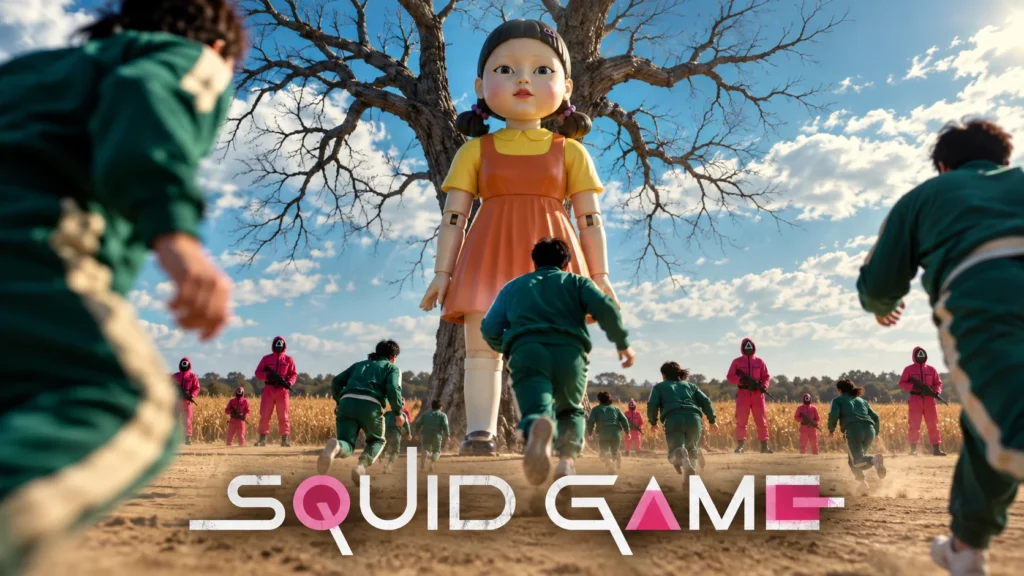
What Happens at the End of Squid Game Season 3?
Gi-hun dies protecting Jun-hee’s newborn daughter, making the baby the final winner of Squid Game.
The final competition, called Sky Squid Game, takes place across three elevated towers. Players must eliminate at least one opponent during each officially activated round.
By the final stage, only Gi-hun, Myung-gi, and Jun-hee’s baby remain.
Myung-gi, the baby’s father, attempts to eliminate his own child to secure the prize money. During his confrontation with Gi-hun, he falls to his death.
However, there is a crucial problem: the final round has not officially started because the activation button was never pressed.
Myung-gi’s death therefore does not count toward the required elimination.
Gi-hun faces an impossible decision. He can kill the defenseless baby, allow them both to be eliminated, or sacrifice himself.
He chooses to protect the child.
After declaring that the contestants are human beings rather than animals to be wagered on, Gi-hun jumps from the tower.
The baby, competing under Player 222, becomes the sole winner of the final game.
Why Does Gi-hun Sacrifice Himself?
Gi-hun’s final decision is the culmination of his struggle to preserve his humanity.
Throughout the series, the games force participants to choose between survival and their moral principles. The Front Man repeatedly attempts to convince Gi-hun that selfishness and betrayal are unavoidable aspects of human nature.
Gi-hun’s choice directly challenges that belief.
Earlier, the Front Man offers him a knife, giving him an opportunity to murder the remaining competitors before the final round. Gi-hun refuses.
His final sacrifice continues that rejection of violence for personal gain.
Gi-hun cannot destroy the entire system, but he can refuse to become the kind of person the system wants him to be.
The baby also represents a future that has not yet been corrupted by the games.
Director Hwang Dong-hyuk has explained that Gi-hun’s sacrifice reflects the responsibility people have to protect future generations, even when doing so demands personal sacrifice.
This makes Gi-hun’s death both tragic and meaningful. He loses his life, but his final decision proves that compassion can survive even in the cruelest circumstances.
Why Does the Baby Win Squid Game?
The baby’s victory represents hope for the next generation, not a conventional triumph over the other contestants.
Jun-hee gives birth during the competition but later dies after entrusting her daughter to Gi-hun.
The organizers allow the newborn to remain in the competition under her mother’s player number, 222.
This decision reveals the game’s complete disregard for human dignity. Even an infant becomes part of the entertainment provided to wealthy spectators.
Yet the ending reverses that cruelty.
Instead of surviving through manipulation, violence, or greed, the baby survives because another person willingly gives up everything.
The child does not understand the competition or its enormous cash prize. Her survival depends entirely on the humanity of others.
Director Hwang has explicitly identified the baby as a symbol of future generations and the possibility of leaving them a better world.
The final winner therefore represents hope rather than greed.
What Happens to the Front Man After Gi-hun’s Death?
The Front Man survives, but Gi-hun’s sacrifice appears to affect him.
After the final game, the authorities approach the island, forcing the organizers to evacuate.
Before leaving, the Front Man takes the surviving baby with him.
Six months later, he secretly leaves the child and her 4.56 billion won prize in the care of his brother, detective Hwang Jun-ho.
He also travels to Los Angeles and delivers Gi-hun’s remaining money to his daughter, Ga-yeong, informing her that her father has died.
These actions suggest that Gi-hun’s final stand has challenged the Front Man’s cynical worldview.
However, the series never confirms that the Front Man completely abandons his beliefs or his connection to the games.
His actions demonstrate that he retains some capacity for compassion, but they do not establish that he has become a fundamentally different person.
This distinction matters because his character remains morally complicated even after the ending.
What Does the Final Scene in Los Angeles Mean?
The last scene reveals that the recruitment system associated with Squid Game still exists outside South Korea.
While driving through Los Angeles, the Front Man notices a woman playing ddakji with a desperate-looking man.
The woman, portrayed by Cate Blanchett, is an American recruiter.
She briefly exchanges glances with the Front Man before continuing her interaction with the potential contestant.
The scene deliberately echoes the recruitment process introduced in Season 1, when a mysterious Korean recruiter approached financially vulnerable people through the same game.
The implication is disturbing: although Gi-hun’s story has ended, the machinery of exploitation has not disappeared.
Director Hwang Dong-hyuk has confirmed that Blanchett’s character is intended to represent an American recruiter.
What the drama confirms: Recruitment connected to the games is taking place in Los Angeles.
What the ending suggests: The system extends beyond the Korean operation seen throughout the series.
However, the scene does not reveal the structure, organizers, or exact rules of any American competition.
It also does not confirm that a separate American television series will follow.
What Is the Deeper Meaning of the Squid Game Ending?
The ending brings the conflict between Gi-hun and the Front Man to its final moral test.
The Front Man believes that desperation exposes humanity’s selfishness. Gi-hun insists that people can still choose compassion.
Neither character succeeds in completely changing the world.
Gi-hun cannot eliminate every organization connected to the games, and the Front Man cannot prove that every person will ultimately betray others to survive.
The baby’s survival is evidence that Gi-hun’s belief in humanity was not meaningless.
At the same time, the Los Angeles scene demonstrates that individual acts of goodness do not automatically dismantle exploitative systems.
This creates a deliberate contrast between personal morality and systemic injustice.
Gi-hun achieves a moral victory, but not a complete institutional one.
The series closes with both realities existing at once: human compassion remains possible, and the structures that reward cruelty remain dangerous.
Is Squid Game’s Ending Happy, Sad, or Bittersweet?
Squid Game has a bittersweet ending with a tragic conclusion for its main character.
Gi-hun dies, and the deadly competition continues to cast a shadow over the world.
However, the baby survives and is given a chance to grow up outside the game.
Other characters also receive signs of hope. Sae-byeok’s younger brother, Cheol, is reunited with his mother, while No-eul learns of a possible lead concerning her missing daughter.
These developments prevent the finale from becoming entirely hopeless.
The ending is definitive about Gi-hun’s fate but leaves the larger existence of the games unresolved.
Does the Ending Set Up Squid Game Season 4?
No. Season 3 is the official conclusion of the original Squid Game series.
Director Hwang Dong-hyuk has confirmed that the third season completes Gi-hun’s story and serves as the planned series finale.
The American recruiter’s appearance leaves room for additional stories set in the same fictional world, but that narrative possibility should not be confused with confirmation of Season 4.
The original series concludes with Season 3, even though its fictional world continues beyond Gi-hun’s death.
FAQ
Does Gi-hun die at the end of Squid Game?
Yes. Gi-hun deliberately sacrifices himself during the final Sky Squid Game to protect Jun-hee’s newborn daughter. His death allows the baby to become the winner. The series confirms his death, bringing Player 456’s story to a definitive conclusion.
Who wins Squid Game Season 3?
Jun-hee’s newborn daughter wins the final competition as Player 222. After Myung-gi dies outside the officially activated final round, Gi-hun sacrifices himself rather than harm the baby. She survives and later receives the 4.56 billion won prize.
Why does the Front Man save the baby?
The Front Man’s decision suggests that Gi-hun’s sacrifice has affected him and that he still possesses some compassion. He rescues the child and later leaves her with Jun-ho. The series does not explicitly establish that he has completely changed his beliefs.
Who is the woman in the final scene?
The woman is an American Squid Game recruiter portrayed by Cate Blanchett. She is seen playing ddakji with a potential recruit in Los Angeles. Her appearance confirms that the recruitment system extends beyond South Korea, although the details of the American operation remain unknown.
Is Squid Game Season 4 confirmed?
No. Season 3 is the confirmed final season of the original series. The Los Angeles ending allows for other stories within the same fictional world, but it does not establish a fourth season following Gi-hun’s storyline.