
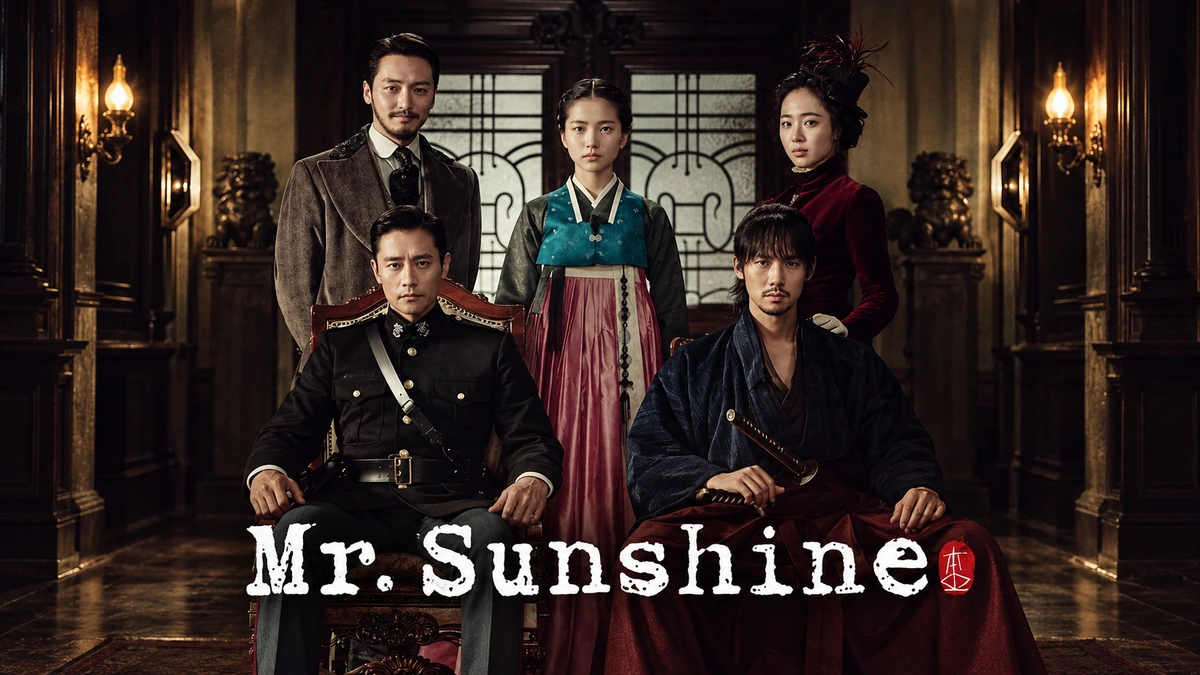
Some love stories unfold against extraordinary historical events. Mr. Sunshine (2018) takes that idea further, combining a sweeping historical romance with political conflict, personal sacrifice, and Korea’s struggle to protect its independence.
Set during the final years of the Joseon era, this 24-episode K-drama follows a Korean-born American military officer whose return to his homeland changes everything he thought he knew about loyalty and belonging.
In this Mr. Sunshine review, we’ll explore the characters, romance, historical setting, and viewing experience without revealing major spoilers.
If you enjoy emotionally powerful romances, complex characters, and beautifully filmed historical dramas, this series deserves a closer look.
Table of Contents
- Quick Info
- What Is Mr. Sunshine About?
- Why Is Mr. Sunshine Worth Watching?
- Characters and Cast
- What Makes This K-Drama Stand Out?
- What to Expect Before Watching
- Who Will Enjoy This Drama?
- Is Mr. Sunshine Worth Watching?
- FAQ
Quick Info
| Details | Information |
|---|---|
| Korean Title | 미스터 션샤인 |
| English Title | Mr. Sunshine |
| Genre | Historical Drama, Romance, Political Drama, Action |
| Release Year | 2018 |
| Episodes | 24 |
| Director | Lee Eung-bok |
| Writer | Kim Eun-sook |
| Main Cast | Lee Byung-hun, Kim Tae-ri, Yoo Yeon-seok, Kim Min-jung, Byun Yo-han |
| Streaming | Netflix |
| Recommended For | Fans of historical romance, emotional storytelling, political intrigue, and character-driven dramas |
What Is Mr. Sunshine About?
The story begins with a young boy born into an enslaved family in 19th-century Joseon. After escaping to the United States during the aftermath of the 1871 American military expedition to Korea, he grows up far from the country that caused him so much suffering.
Years later, he returns to Korea as Eugene Choi (Lee Byung-hun), an officer in the United States Marine Corps.
But the country he remembers is changing rapidly.
Foreign powers are competing for influence, traditional social divisions remain deeply rooted, and the threat to Korea’s sovereignty is growing.
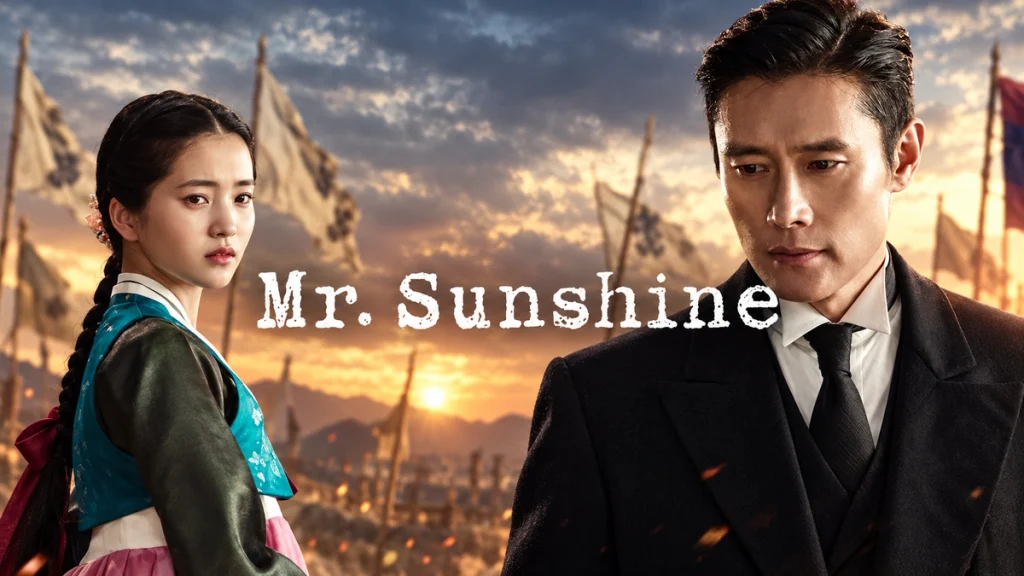
Eugene encounters Go Ae-shin (Kim Tae-ri), an aristocratic young woman whose privileged upbringing hides a fierce determination to defend her homeland.
Their developing connection brings together two people with dramatically different experiences of Korea.
As political tensions rise, their personal feelings become intertwined with questions of identity, loyalty, freedom, and the meaning of home.
Why Is Mr. Sunshine Worth Watching?
1. A Romance Shaped by History and Conflicting Loyalties
The relationship between Eugene and Ae-shin is one of the drama’s strongest attractions.
Unlike romantic comedies that rely on misunderstandings or playful arguments, Mr. Sunshine builds its romance through restrained emotions, meaningful conversations, and difficult circumstances.
Eugene has complicated feelings about the country where he was born. Ae-shin, meanwhile, believes protecting that country is worth risking her comfortable life.
Their attraction develops alongside a deeper question: Can two people with different loyalties imagine a shared future?
The tension comes not simply from whether they love each other, but from what loving each other might require.
Viewers who appreciate slow-burn romance with emotional depth will find plenty to engage with here.
2. A Historical World That Feels Both Beautiful and Dangerous
One of the first things viewers may notice is the show’s striking visual presentation.
Traditional Korean houses, elegant clothing, lantern-lit streets, and scenic landscapes create a richly detailed setting.
At the same time, trains, foreign embassies, modern weapons, and Western-style hotels reveal a society experiencing enormous change.
These contrasting details make the period more than an attractive backdrop.
The setting actively shapes the characters’ choices, showing how political upheaval can reach into friendships, relationships, and everyday life.
The cinematography often allows quiet moments to unfold without rushing toward the next dramatic event.
For viewers who enjoy immersive period dramas, this deliberate visual storytelling is a major part of the appeal.
3. Political Tension That Gives Personal Choices Greater Weight
The political story is not limited to battles or confrontations between powerful figures.
It also examines how people from different social backgrounds respond when their country faces an uncertain future.
Some characters have benefited from the existing social order. Others have suffered because of it.
Their contrasting experiences create disagreements about duty, justice, and whether a homeland deserves loyalty from everyone who was born there.
Mr. Sunshine makes these questions personal rather than presenting history as a simple series of events.
That approach adds emotional weight to the drama’s romance and character relationships without turning the series into a history lecture.
Characters and Cast
Lee Byung-hun as Eugene Choi
Eugene is a particularly interesting protagonist because his relationship with Korea is deeply conflicted.
Having escaped the cruelty of Joseon’s class system, he returns as a man with American citizenship, military authority, and little reason to feel patriotic.
Lee Byung-hun portrays Eugene with remarkable restraint, using measured expressions and controlled dialogue to suggest emotions that the character rarely explains openly.
His reserved personality creates an intriguing contrast with the passion of those around him.
Kim Tae-ri as Go Ae-shin
Ae-shin is not simply a noblewoman caught in a forbidden romance.
Behind her refined appearance is a determined young woman who secretly participates in efforts to resist foreign threats.
Kim Tae-ri gives Ae-shin a combination of elegance, conviction, and vulnerability.
Her character provides much of the drama’s emotional energy while challenging the restrictions placed on women of her social class.
Yoo Yeon-seok, Kim Min-jung, and Byun Yo-han
The supporting characters are essential to the story’s appeal.
Yoo Yeon-seok plays Gu Dong-mae, a skilled swordsman whose painful background complicates his relationships with the people of Joseon.
Kim Min-jung portrays Kudo Hina, the independent owner of the Glory Hotel, who navigates a world dominated by powerful men and competing interests.
Byun Yo-han plays Kim Hee-sung, a wealthy gentleman whose seemingly carefree manner contrasts with the expectations attached to his family.
These characters bring different perspectives on love, privilege, survival, and belonging.
Their interconnected relationships create tension that goes well beyond a conventional romantic triangle.
What Makes This K-Drama Stand Out?
The most distinctive feature of Mr. Sunshine is how closely its personal relationships are connected to its historical setting.
The drama does not treat romance as an escape from political reality. Instead, political events influence how characters understand affection, responsibility, and freedom.
Another memorable element is the contrast between traditional Korean society and the increasingly international world surrounding it.
Different languages, clothing styles, social customs, and political interests constantly intersect.
The Glory Hotel, for example, becomes a fascinating meeting place for characters whose backgrounds and motivations rarely align.
The series also uses quiet conversations, symbolic gestures, atmospheric music, and carefully composed scenes to create emotional tension.
Rather than depending entirely on spectacular action, it often makes a simple exchange of words feel consequential.
What to Expect Before Watching
Mr. Sunshine is a serious, emotionally demanding historical drama, not a light romantic comedy.
The early episodes devote considerable attention to introducing the period, political factions, and complex character relationships. Viewers looking for immediate romantic developments may find the beginning relatively slow.
The story gradually builds momentum as those connections become clearer.
Romance is important, but it shares the spotlight with political intrigue, social inequality, resistance, and questions of national identity.
Expect occasional gunfights, sword combat, threatening situations, and depictions of violence associated with the historical setting.
The series also carries a frequently bittersweet emotional tone.
With 24 substantial episodes, it is better suited to viewers willing to invest time in an expansive story than those seeking a quick weekend romance.
Who Will Enjoy This Drama?
You’ll probably enjoy Mr. Sunshine if you like historical dramas in which relationships are shaped by larger social and political events.
It’s especially well suited to viewers who appreciate:
- Slow-burn romance built on meaningful emotional connections.
- Historical settings with political intrigue and cultural detail.
- Complex characters whose motivations are shaped by difficult past experiences.
- Cinematic storytelling with atmospheric visuals and music.
- Emotionally intense dramas that explore loyalty, courage, and sacrifice.
Fans of The Red Sleeve may appreciate its combination of historical pressures and emotionally restrained romance.
Those who enjoy the large-scale production and dramatic relationships of The King: Eternal Monarch may also appreciate its visual ambition, although Mr. Sunshine is more historically grounded and politically serious.
If you mainly prefer fast-moving, cheerful romances, however, this may not be your ideal next series.
Is Mr. Sunshine Worth Watching?
Yes—Mr. Sunshine is worth watching, especially if you enjoy emotionally rich historical dramas that give their characters and relationships room to develop.
Its strongest appeal comes from the combination of a carefully constructed historical atmosphere, compelling performances, and relationships shaped by conflicting personal loyalties.
Eugene and Ae-shin’s romance offers emotional tension without relying on constant declarations of love. Meanwhile, the surrounding characters add perspectives that make the story feel broader and more human.
The production’s impressive visual style also makes the historical setting an important part of the viewing experience.
However, the deliberate pacing, lengthy episodes, and serious political themes mean the series requires more patience than a typical romantic K-drama.
For viewers who prefer character-driven storytelling over rapid plot twists, that slower approach can be rewarding.
If you’re looking for a Korean drama that combines historical romance, memorable characters, and meaningful emotional stakes, Mr. Sunshine is a strong choice for your watchlist.
FAQ
Is Mr. Sunshine based on a true story?
Mr. Sunshine is historical fiction rather than a direct adaptation of one true story. It uses real historical events and the political situation surrounding Korea in the late 19th and early 20th centuries, but its main characters and their personal relationships are fictionalized.
Is Mr. Sunshine available on Netflix?
Yes, Mr. Sunshine has an official Netflix listing. The 2018 Korean drama originally aired on tvN and was distributed internationally through Netflix. Streaming availability and viewing options can vary by country, so check your local Netflix catalog for current access.
Does Mr. Sunshine focus more on romance or action?
Mr. Sunshine combines historical romance with political drama and action. Romance plays a central role in the characters’ emotional journeys, but the story also gives substantial attention to Korea’s political situation, resistance movements, and conflicts between different social groups.
Is Mr. Sunshine difficult to understand without knowing Korean history?
No prior knowledge of Korean history is required to follow the main story. The drama introduces its characters and political conflicts through the narrative. However, a basic understanding of Joseon’s class system and the foreign pressures facing Korea around 1900 can make some historical details more meaningful.